History of the IKS
History, Development, and Activities of the
International Kodály Society (IKS)
Origins and International Context
The International Kodály Society (IKS) was founded on 11 August 1975 in Kecskemét with the purpose of preserving, promoting, and renewing the intellectual and pedagogical legacy of Zoltán Kodály. Headquartered in Budapest, the Society has since functioned as an international professional forum supporting music education grounded in Kodály’s principles. Its significance was reinforced in December 2016, when Kodály-based music education was inscribed on UNESCO’s Representative List of the Intangible Cultural Heritage of Humanity.
The emergence of the IKS was the result of several decades of growing international interest in Hungarian music education. From the mid-1950s onwards, Kodály’s ideas attracted attention beyond Hungary, initially through personal contacts, visiting musicians, and conference participation. During the 1960s this interest intensified, supported both by Kodály’s direct involvement and by the expanding international networks of his students and followers. This rising interest led to the establishment of training opportunities for musicians and educators in many countries from the late 1960s. These programmes not only transmitted pedagogical principles but also facilitated the formation of enduring professional and personal networks.
Over time, these dispersed initiatives generated a need for international coordination, communication, and professional exchange. This environment ultimately provided the conditions for the creation of an international society dedicated specifically to Kodály’s legacy.
The First International Kodály Symposium and the Founding of the IKS
A decisive step towards institutionalisation was the First International Kodály Symposium, held in August 1973 at Holy Names College in Oakland, California. The symposium was the outcome of nearly two years of preparatory work involving American and Hungarian educators, as well as governmental agencies responsible for international exchange programmes. The initiative was led jointly by Erzsébet Szőnyi and Sr Mary Alice Hein, whose suggestion of a binational conference developed into the idea of a fully international symposium.
At the conclusion of the symposium, delegates elected an international preparatory committee.
The founding General Assembly took place in August 1975 and formally declared the establishment of the International Kodály Society. The Society’s objectives were defined as the global promotion of Kodály’s ideas, particularly in youth education, and to foster international understanding.
Early Operations and Organisational Identity
The early years of the IKS were marked by efforts to establish operational structures and define the Society’s identity.
The Statutes provided for the creation of professional working committees and encouraged the establishment of national councils under the IKS.
By the end of the 1970s the Bulletin and the International Kodály Symposia had become established as the Society’s central forums.
Consolidation, Change, and Redefinition (1980s–1990s)
From the early 1980s onwards, the IKS underwent a gradual process of consolidation and redefinition. Membership remained relatively stable, and the number of national member organisations increased.
At the same time, the Society increasingly defined itself as a partner and forum rather than an overseeing authority.
New initiatives included scholarships and publications.
Throughout this period, the Board reaffirmed that the IKS positioned itself as a facilitator and advocate, respecting the autonomy of national organisations and individual practitioners.
Developments from the Late 1990s to the Present
From the late 1990s onwards, efforts were made to enhance direct communication through publications, directories, and the development of an independent website.
New strategies, including online registration and social media engagement, were introduced to support membership recruitment and retention.
The COVID-19 pandemic accelerated the adoption of digital practices which demonstrated new possibilities for international collaboration and engagement.
Since the 2020s, the IKS leadership has sought to integrate earlier approaches by combining international advocacy, support for local initiatives, and the development of its own projects and services.
Promoting Kodály’s Legacy: Activities, Bulletin, and Symposia
Across its fifty-year history, the IKS has pursued its mission through professional activities, scholarships, publications, and events.
Two regular communication channels have remained central to the Society’s work: the International Kodály Symposium and the Bulletin of the International Kodály Society. The biennial symposia, organised under IKS auspices since 1977, provide opportunities for professional exchange, networking, and the presentation of local achievements by host countries. Over time, their focus has shifted towards more practical applications, workshops, and shared music-making, reflecting broader changes in music education and professional expectations.
The Bulletin, published twice yearly since 1976, was conceived as a means of disseminating research, best practice, and professional reflection. From the early 2000s onwards, increasing emphasis was placed on its status as a peer-reviewed academic journal. Its inclusion in the RILM database in 2015 marked an important step towards wider recognition.
Together, the Bulletin and the symposia have enabled international dialogue within the global Kodály community, maintaining a consistent emphasis on the enduring relevance of Kodály’s philosophy with broader educational and cultural developments.
Conclusion
Over time, the IKS has evolved into a flexible professional forum that prioritises connection, dialogue, and advocacy.
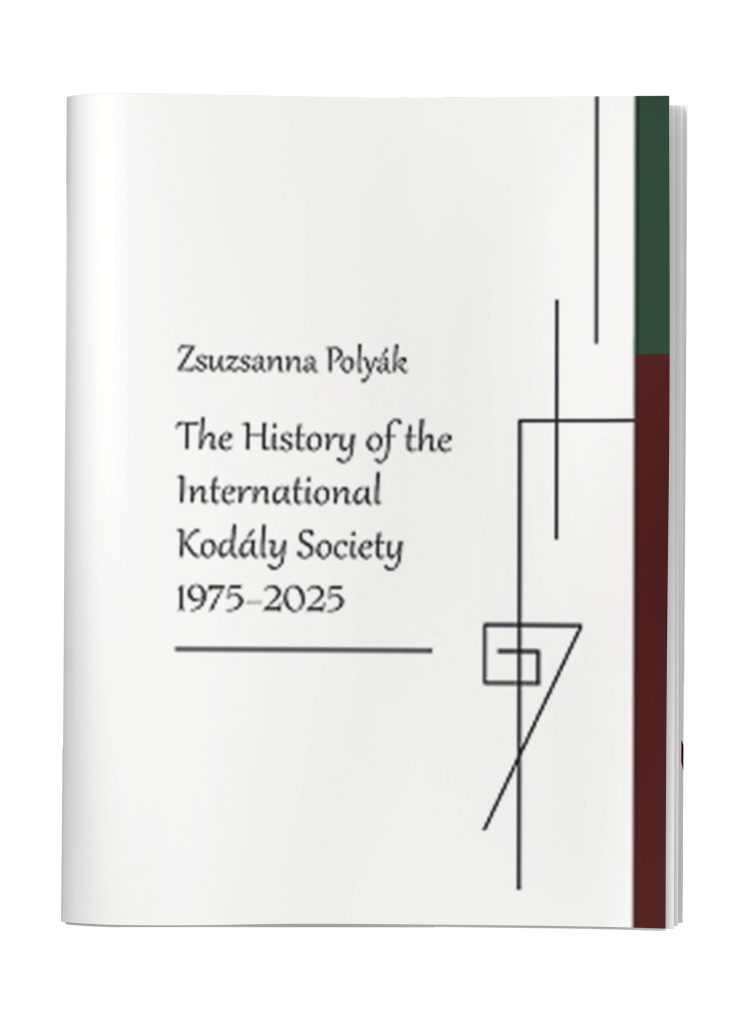
If you are interested in learning more details about the history of the IKS read this book: